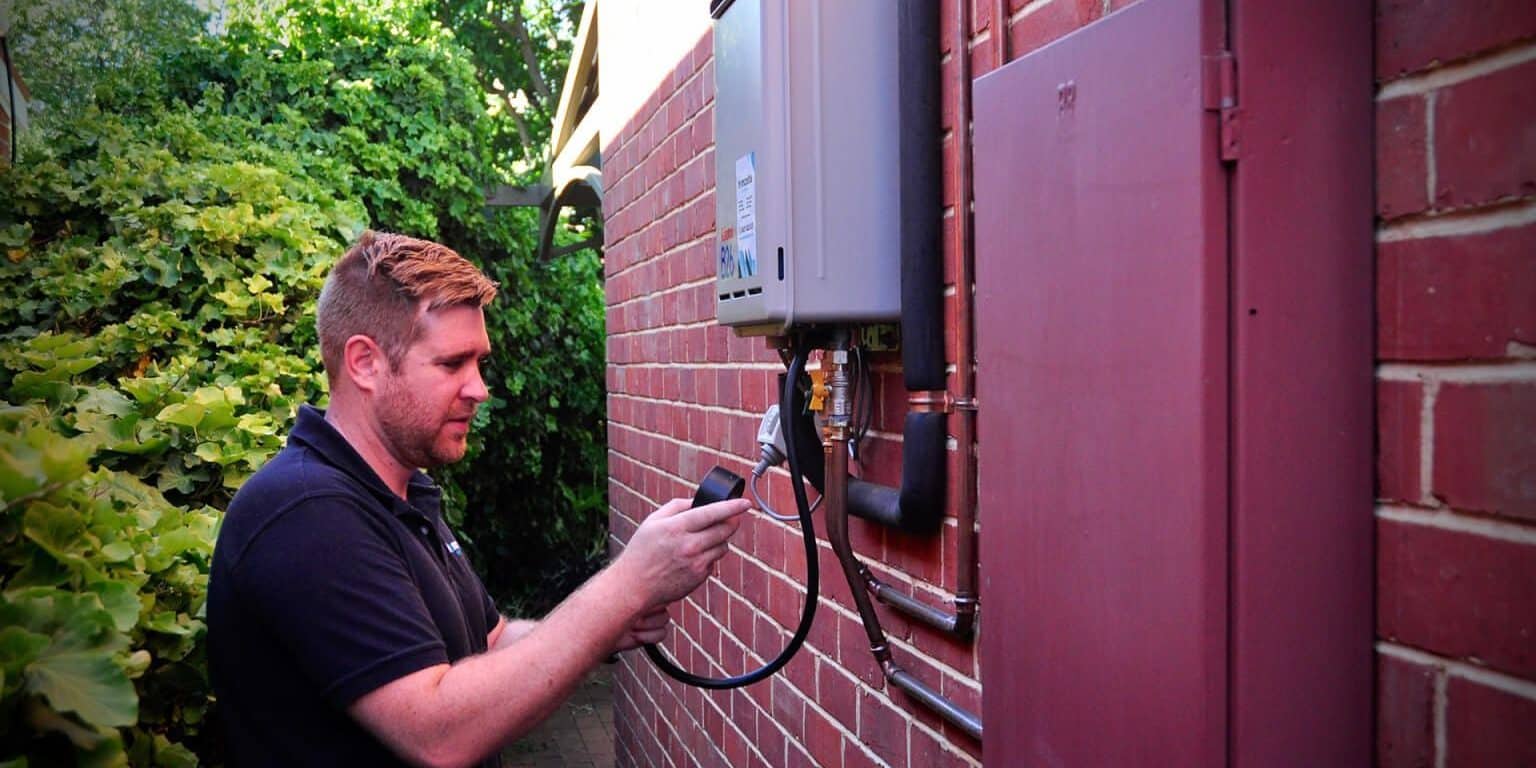
Hot Water System Leaking From The Overflow Pipe? When Is a Drip Normal
If you notice a small drip from your hot water system’s overflow pipe while it heats, it’s normal. That’s the relief valve releasing water as it expands. A constant trickle or water pooling at the base means something’s wrong, and a plumber should take a look.
Key Takeaways:
- A few drops from the overflow pipe while the tank heats is completely normal and nothing to worry about.
- A steady trickle usually points to high main pressure or a worn valve
- Many South Australian systems have a second pipe on the cold supply that drips during heating as well
- Lifting the easing lever gently every six months helps clear mineral build-up
- Water leaking from the tank itself means it has malfunctioned and needs professional replacement
You’re hanging the clothes after washing and notice a wet patch under the copper pipe by the hot water unit. Drip… drip.
Most people jump straight to the worst case and start worrying about replacing the whole unit. But what if we tell you the solution might be easier than you think?
The function of the overflow is to let the water out, but the trick is to understand how much is normal and when it’s trying to tell you something.
What Does The Overflow Pipe Do
Let’s start with a little physics. Water expands as it heats up, but inside a sealed cylinder, that extra volume has nowhere to go. The pressure climbs, and some water starts overflowing.
The pressure and temperature relief valve (the PTR valve) sits near the top of the tank. When pressure or temperature gets too high, it opens and sends water out through the overflow.
We’d call it the most important safety part on the whole system. If it leaks a little, it’s working. If it’s seized shut, it’s trying to retire.
When A Drip Is Normal
According to the Thermann owner’s guide, water dripping from the drain line during heating is normal; expect about 2% of the water to be heated. If a 250-litre tank heats right through, that’s roughly 5 litres.
You’ll usually notice it after the morning showers while the unit reheats the water everyone just used, but then it stops.
Adelaide homes often have a second pipe doing the same thing, and it’s easy to mistake it for a fault. In South Australia, the same Thermann manual requires an expansion control valve on the cold water line. Two dripping pipes at once are fine.
When It Isn’t Normal
A steady trickle all day long or water gushing out might be a sign to start worrying about the system.
Here’s where we start looking.
High Mains Pressure
When the pressure coming into your home runs high, the PTR keeps opening to protect the cylinder. Where mains pressure can top 800 kPa, Thermann’s manual requires a pressure-reducing valve on the cold supply. A plumber can test yours on the spot with a gauge, and fitting a reducing valve is a quick job.
A Worn or Blocked Valve
Adelaide’s hard water leaves mineral deposits behind. They can stop the PTR from sealing properly, and we’ve written about how our water quality affects hot water systems before. Parts wear out with age as well. Thermann’s five-year service includes swapping the PTR for a new one, so check the install date on your system’s label.
A Thermostat Fault
If the thermostat stops switching off, the water keeps heating. The PTR then keeps letting it out to stay safe, which is why the overflow never seems to stop. That’s a job for a licensed professional.
When The Tank Itself Is Leaking
Water at the base of the unit points to a bigger problem. So do rust streaks, or damp patches well away from the overflow. Leaks like these can come from a corroded tank, a damaged relief valve or loose connections. Corrosion is the one nobody can patch. Once a system is past ten years old and the tank weeps, put the money toward a new one.
Our post on repairs vs replacement helps you weigh it up.
The Six-Month Lever Check
Most PTR valves have a small easing lever on top. Lifting it every six months stops mineral deposits from building up inside, and RMC’s valve guide gives the same advice.
Lift it gently for about 10 seconds, then lower it slowly. Stand clear. The water will be hot.
Still trickling afterwards? Leave it and get in touch. Whatever you do, never block, cap or tie off the overflow. It’s the tank’s safety net.
Book A Hot Water Check
Not sure whether your drip is normal? Book online and get 10% off labour, with no call-out fee and same-day service available. Our team handles hot water system repairs across Adelaide. Call (08) 8271 0664 today.
FAQs
Should I turn off my hot water system if it’s leaking?
For a small drip during heating, there’s no need. Water coming from the tank itself is different, and so is an overflow that’s gushing out. Switch the system off at the switchboard if it’s electric, or at the gas control if it’s gas. Then close the cold water isolation valve and ring a plumber.
How much does it cost to replace a hot water relief valve?
It depends on the valve your system needs and how easy it is to reach. We quote before starting, with labour from $99 and no call-out fee. Ask whether the expansion control valve is due for a swap at the same visit, since both wear over time.